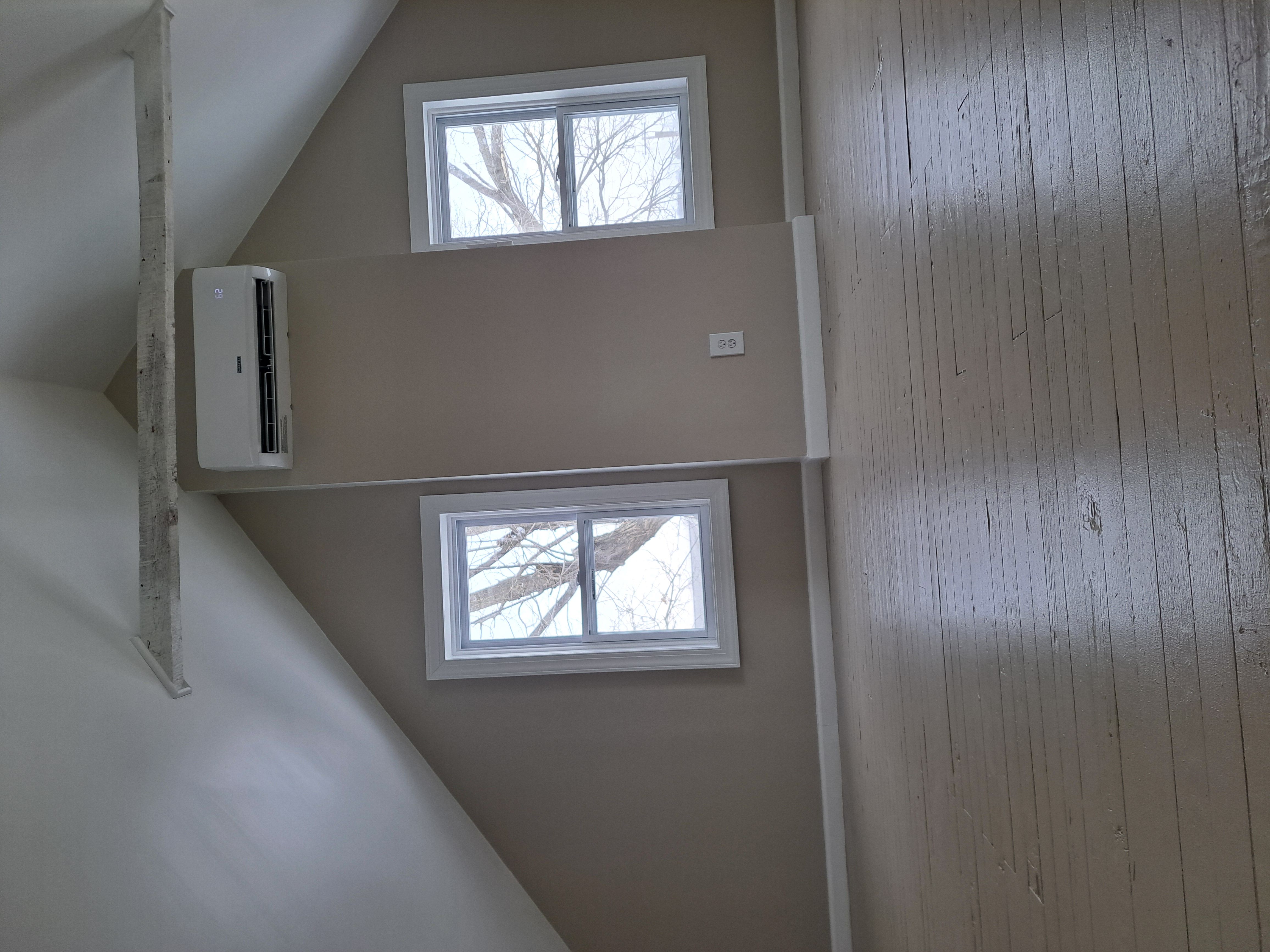
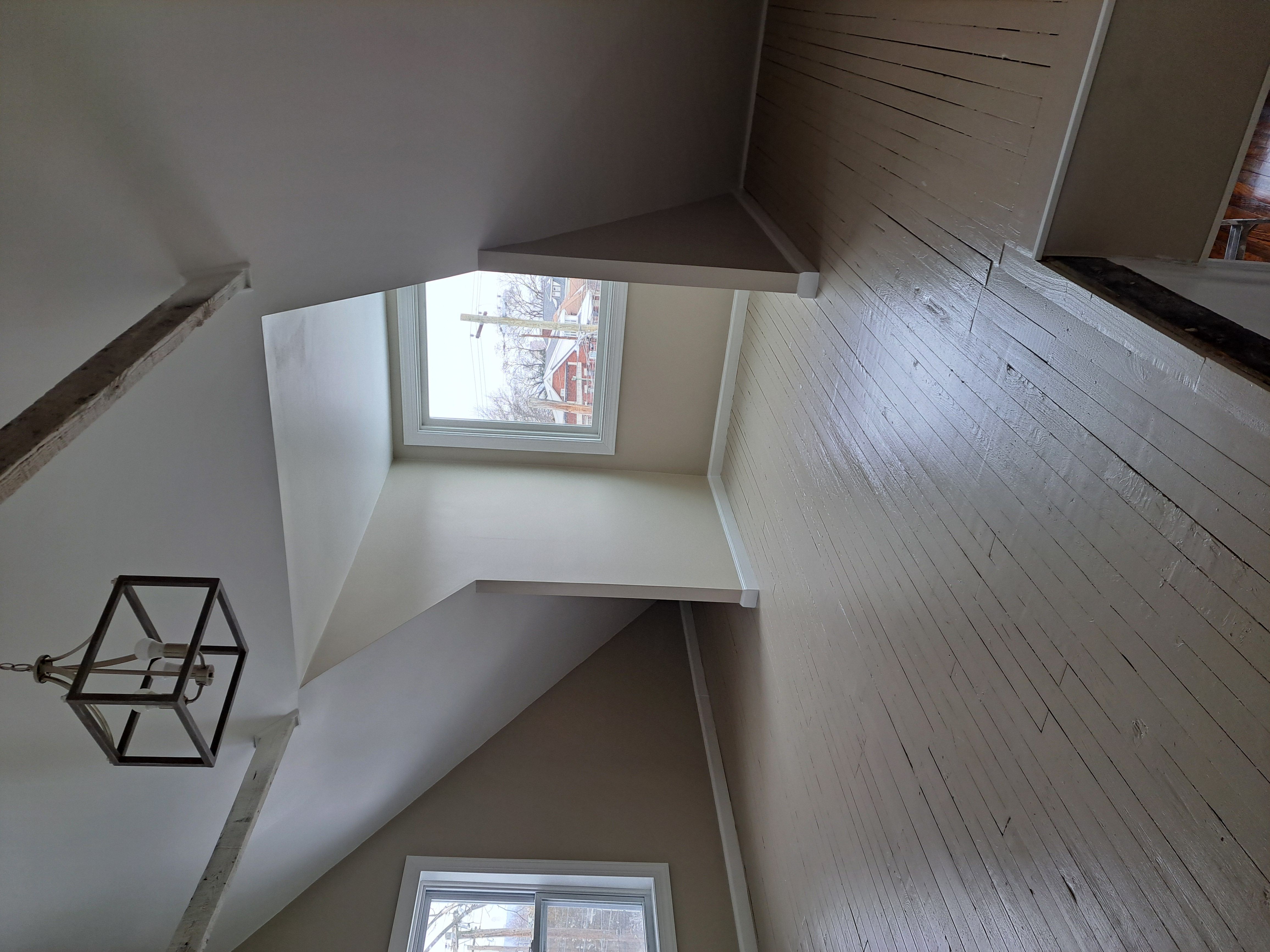
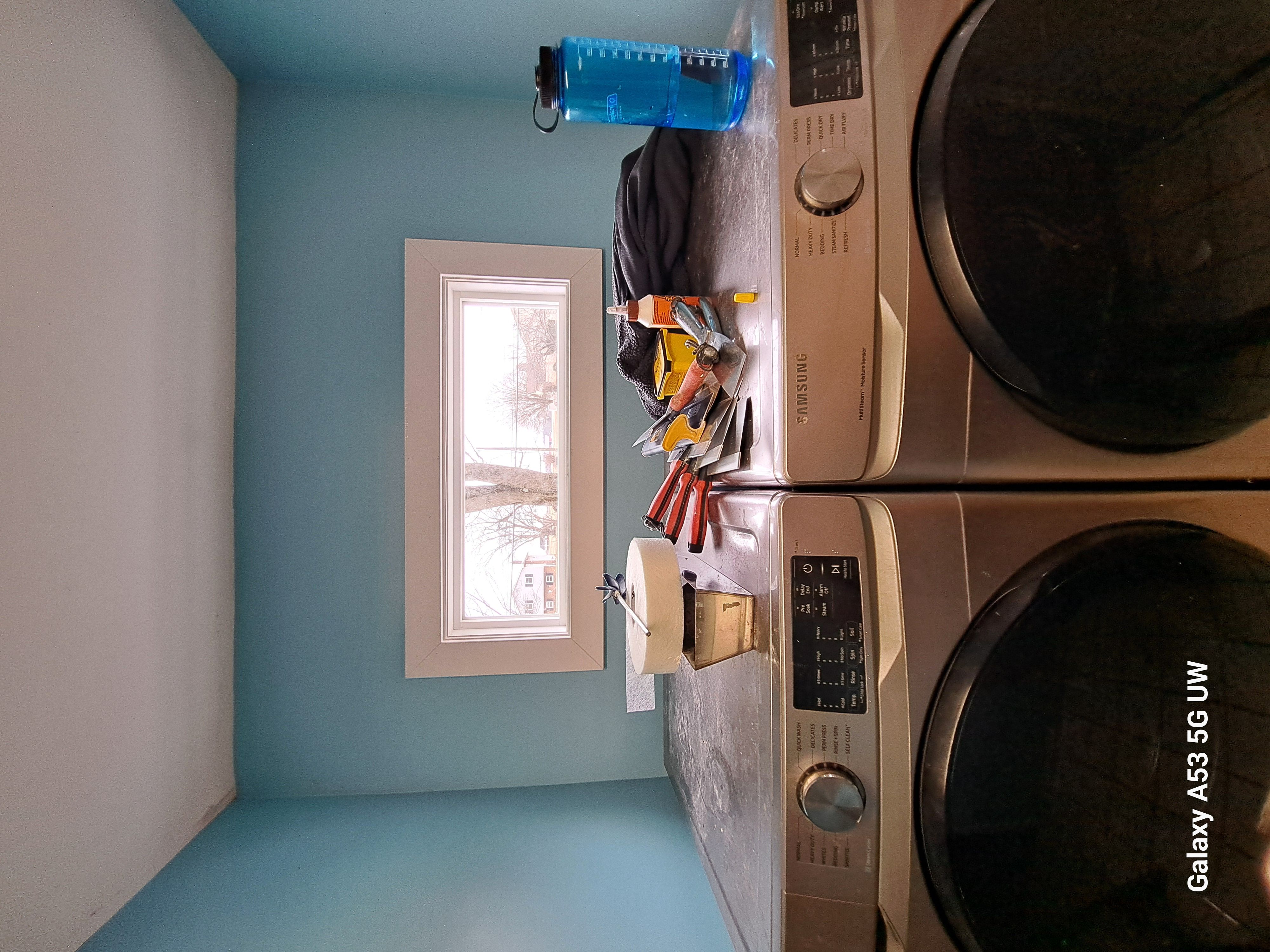
Painting that starts with the wall, not the paint
Most of the difference between a paint job that looks good for eight years and one that looks tired in two happens before the first coat. Nail pops get set, seams get re-taped, water stains get sealed instead of painted over, and caulk lines get cut out and replaced rather than layered on top of old caulk.
We do drywall and plaster repair as its own trade, so patching is not something we sub out or rush through to get to the fun part. If your walls need work first, we will tell you what that adds before you commit — not after we have moved in.
What we paint
- Interior walls and ceilings
- Trim, casing, baseboard and interior doors
- Kitchen and bathroom repaints, including moisture-rated finishes
- Exterior siding, soffit, fascia and porch ceilings
- Exterior doors, shutters and railings
- Single rooms — we take small jobs
What we don't
- Cabinet spraying in a booth
- Lead-paint abatement — we refer that out
- Commercial buildings and multi-unit turnovers
- Anything needing more than one crew running at once
If your project lands in that second column, we will say so on the phone rather than book an estimate we cannot honour.
Painting questions we actually get asked
Straight answers, including the ones about money. If your question is not here, call and ask.
How much does it cost to paint a room in York County, PA?
Interior painting in this area is normally priced by square foot of wall and ceiling area, not by the room, because a 12x12 bedroom with eight-foot ceilings and one window is a different job from a 12x12 room with a cathedral ceiling and four windows. Covers a typical bedroom with walls and ceiling, two coats over a sound surface, trim included. Prep is what moves the number: heavy patching, wallpaper removal, or sealing smoke and water damage all add labour before any paint goes on. We quote the prep separately and in writing so you can see exactly what you are paying for.
Does a paint job include patching the drywall first?
Basic patching is part of every interior job we quote — nail holes, small dings, minor seam cracks and setting popped fasteners. What is not automatically included is real drywall repair: a failed ceiling seam, a hole bigger than a fist, water damage that needs the board cut out and replaced, or plaster that is separating from the lath. Those get quoted as their own line item, because pretending a patch is free is how a painter ends up cutting corners on it. We do drywall and plaster repair as its own service, so the repair is done properly and then painted, rather than skimmed over.
How many coats of paint do you use?
Two finish coats as standard on interior walls and ceilings. Primer goes on as a third step wherever it is actually needed — bare drywall, patched areas, stains, a dramatic colour change, or raw wood trim — rather than everywhere as a default upcharge. Some situations genuinely need more: deep reds and bright yellows often take three finish coats to cover evenly no matter whose paint you buy, and we will tell you that when you pick the colour rather than after. If a quote from anyone says one coat, ask what happens when the old colour ghosts through.
Can you paint the outside of a house in Pennsylvania in winter?
Mostly no, and we would rather lose the job than do it wrong. Most exterior paints need surface and air temperatures to stay above roughly 50°F through the cure, and overnight lows in York County drop below that from late October into April. Paint applied below its minimum temperature can look fine for a season and then fail early — poor adhesion, chalking, peeling at the seams. There are cold-weather formulations rated near 35°F and we will use them where it makes sense, but the honest answer for most of a Pennsylvania winter is that exterior work waits for spring. Interior work runs year-round.
Do you move furniture and cover the floors?
Yes, and it is included rather than an extra. We move what two people can safely move to the middle of the room and cover it, mask the floors, and take doors off their hinges where that gives a better finish on the casing. What we ask you to handle is anything fragile, valuable or irreplaceable — electronics, artwork, glass cabinets — because we would rather you packed those yourself than have us guess what matters. At the end of each day the room gets swept and the walk-through path stays clear. You keep living in the house while we work.
Often quoted together with painting
Drywall & Plaster Repair
The step before paint on most older York County homes. Seams, ceilings, water damage and plaster.
Doors & Trim
New casing and baseboard are far easier to paint before they go up. Worth bundling.
Kitchen Remodeling
Paint is usually the last trade in a kitchen. Sequencing it with the rest saves a return trip.
Want a number on it?
Tell us the rooms and roughly what shape the walls are in. We will give you a written quote with the prep broken out, so nothing shows up later as a surprise.